What was in the COP26 agreement?
You may be wondering:
What has the Glasgow Climate Pact achieved?
Are the COP agreements legally binding?
Should we be disappointed in what was achieved at COP26?
What exactly is in the COP26 agreement?
Emissions
It was agreed countries will meet next year to pledge further cuts to emissions of carbon dioxide (CO2) – a greenhouse gas which causes climate change.
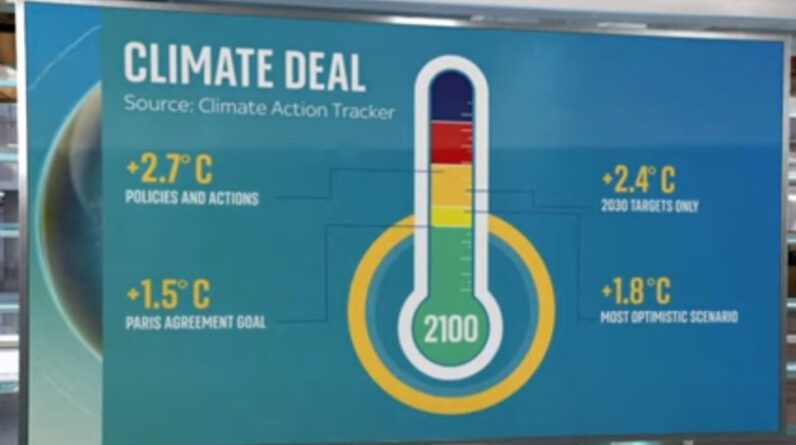
This is to try to keep temperature rises within 1.5C – which scientists say is required to prevent a “climate catastrophe”. Current pledges, if met, will only limit global warming to about 2.4C.
Coal
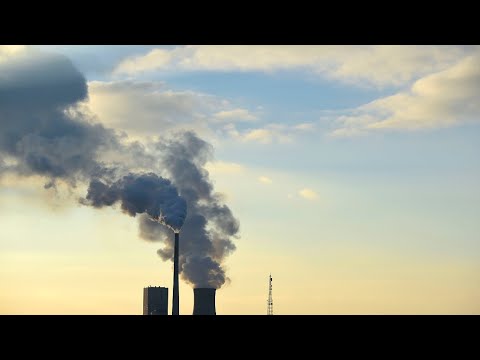
Coal is responsible for 40% of annual CO2 emissions. This was the first COP to actually address the issue with a concrete plan.
However, the decision to change the wording to “phase down” rather than “phase out” coal was a disappointment to many.
Fossil fuel subsidies
Some countries subsidize the production of coal, oil and natural gas which makes the prices of these cheaper.
It was agreed that these subsidies should be phased out but no time period was agreed.
Methane
Methane is another gas that contributes to global warming accounting for around a third of the increase.
More than 100 countries have agreed to cut methane emissions by 30% by 2030. Unfortunately those that have signed up do not include the major emitters of China, India and Russia.
Developing countries
The agreement pledged to significantly increase money to help poor countries cope with the effects of climate change and make the switch to clean energy.
There’s also the prospect of a trillion dollar a year fund from 2025 – after a previous pledge for richer countries to provide $100bn (£72bn) a year by 2020 was missed.
While some observers say the COP26 agreement represented the “start of a breakthrough”, some African and Latin American countries felt not enough progress was made.
US-China agreement
China and the USA are responsible for the most CO2 emissions. The two super powers pledged to cooperate more over the next decade in areas including methane emissions and the switch to clean energy.
It appears that China has now agreed that there is a need for action which is a huge step forward as it has been unwilling to reduce coal emissions in the past.
Trees
Trees are the planets natural cleaners as they absorb CO2 in huge quantities. Many of the forests have been destroyed to clear land for farming and industry.
85% of the world’s forests are spread between around 100 countries. It is encouraging that these countries have agreed to stop deforestation by 2030.
Money
As usual the question of money influences what can be agreed. It is generally recognized that private companies need to be a part of the solution.
Financial organizations controlling $130tn agreed to back “clean” technology, such as renewable energy, and direct finance away from fossil fuel-burning industries.
However, some environmental organizations feel that the dumbing down of the agreement on coal and fossil fuel subsidies shows that this may be just talk.
COP26 – should we celebrate or be disappointed?
The UN regards the Paris agreement as legally binding:
The Paris Agreement is a legally binding international treaty on climate change that was adopted by 196 Parties at COP 21 in Paris in 2015 and came into force the following year. Its goal is to limit global warming to well below 2, preferably to 1.5 degrees Celsius, compared to pre-industrial levels.
Disappointments
The biggest disappointment was probably the late change to the agreement on phasing out coal.
The problem with the agreements that were achieved is that in most cases they are widely regarded as not legally binding. Even if they were, who exactly would police them and enforce any fines or punishments? There is no global police and any commitments are therefore subject to self-policing.
Reasons to be cheerful, Part 26?
Looking on the bright side, the COP26 agreement has set the global agenda on climate change for the next decade.
The US and China agreement is welcomed, the fact that coal and fossil fuel subsidies have been addressed (albeit not as much as many wanted) and the fact that 1.5 degrees Celsius is accepted as the ideal target are all welcome. How exactly countries are planning to meet the 1.5 degrees target has been put off until they reconvene next year.
We should definitely celebrate what has been achieved but accept that there is still a long way to go.